
Why Mortgage Rates Aren’t Falling Even When the Federal Reserve Cuts Rates
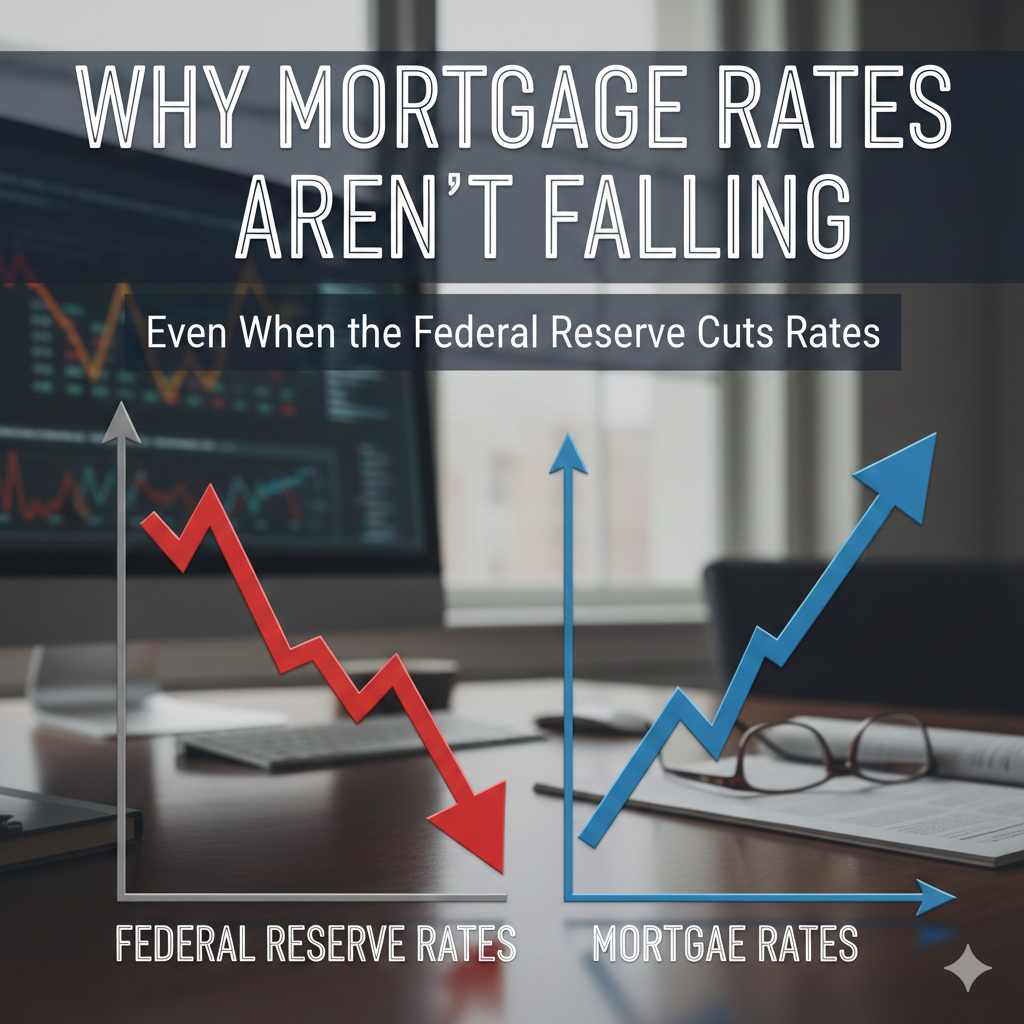
Many buyers and homeowners assume that when the Federal Reserve cuts interest rates, mortgage rates should immediately follow. So it’s understandable that people are confused and frustrated when the Fed announces a rate cut and mortgage rates stay stubbornly high.
The reality is that mortgage rates and the Federal Reserve’s rate are related, but they are not the same thing. Here’s what’s really going on.
The Fed Controls Short-Term Rates Not Mortgage Rates
The Federal Reserve sets the federal funds rate, which is the overnight rate banks charge each other to borrow money. This rate influences:
Credit cards
Auto loans
Business loans
Savings account yields
Mortgage rates, however, are long-term rates, typically tied to the 10-year U.S. Treasury bond, not the Fed’s overnight rate.
That means mortgage rates respond more to long-term economic expectations than to a single Fed decision.
Mortgage Rates Move on Expectations, Not Headlines
Mortgage rates are forward-looking. Lenders and investors price them based on what they expect to happen in the future, including:
Inflation trends
Economic growth
Government debt and spending
Global economic stability
Often, markets “price in” expected Fed cuts months in advance. By the time the Fed actually cuts rates, mortgage markets may have already reacted or may be reacting to new concerns instead.
In some cases, mortgage rates can even rise after a Fed cut if investors worry inflation will remain sticky or economic growth will stay strong.
Inflation Is Still the Biggest Wild Card
Inflation plays a major role in mortgage pricing.
When inflation is higher or unpredictable, investors demand higher returns to protect the value of their money over time. That means higher mortgage rates, regardless of what the Fed does in the short term.
Until inflation is clearly and consistently under control, mortgage rates are unlikely to drop sharply.
The Bond Market Matters More Than the Fed
Mortgage rates closely track the 10-year Treasury yield. If Treasury yields rise due to:
Strong employment data
Increased government borrowing
Global uncertainty
Mortgage rates often rise even during periods when the Fed is easing policy.
In short: bond investors, not the Fed, are driving mortgage rates right now.
Why This Doesn’t Mean Buyers Should “Wait It Out”
Many buyers are sitting on the sidelines hoping for a dramatic rate drop. But historically:
Mortgage rates tend to move gradually, not suddenly
Competition increases quickly when rates fall
Home prices often rise when borrowing becomes cheaper
Waiting for the “perfect” rate can mean missing opportunities especially in markets where inventory remains limited.
What This Means for Buyers and Homeowners
Rather than trying to time the market perfectly, smart buyers and homeowners are focusing on:
Monthly payment comfort
Negotiating price or seller concessions
Adjustable or temporary rate-buydown options
Refinancing later if and when rates improve
Real estate decisions are long-term, and financing strategies can evolve over time.
The Bottom Line
Federal Reserve rate cuts don’t automatically translate into lower mortgage rates and they never have. Mortgage rates reflect a broader set of economic forces, particularly inflation expectations and bond market behavior.
Understanding this helps buyers and sellers make more confident, informed decisions without relying on headlines alone.
If you’re curious how today’s rate environment affects your specific situation, I’m always happy to walk through the options.